
The Condo Specifics for Kitchen Renovations
If you’ve been researching kitchen renovations in Vancouver, most of the advice you’ll find assumes you’re working in a detached house. Open up a wall, move the plumbing island to the centre of the room, add a window over the sink. That advice doesn’t transfer cleanly to a condo. A condo kitchen renovation in Vancouver involves a different set of constraints, approvals, and logistics that directly affect your design options, your timeline, and your budget.
None of this means you can’t get an excellent kitchen renovation in a condo. But the process is different from a house renovation in ways that matter, and understanding those differences upfront will save you time, money, and frustration.
Structural Limits Change What’s Possible
In a house, if you want to remove a wall between the kitchen and dining room, a structural engineer can usually design a beam to carry the load, and your contractor installs it. In a condo, the calculus is different. Many Vancouver condo buildings, particularly concrete towers from the 1970s through the 1990s, use shear walls and columns that are part of the building’s structural system. You cannot modify or remove these elements. Period.
This doesn’t mean you’re stuck with your existing layout. It means your design has to work within the structural grid of the building. A good design-build team will assess which walls in your unit are structural and which are partition walls before any design work begins. Partition walls can often be removed or relocated to open up sight lines and improve flow between the kitchen and living areas. The key is knowing which is which before you fall in love with a floor plan that isn’t buildable.
In our experience with condo renovations across Metro Vancouver, roughly half of the kitchen walls clients want to remove turn out to be partition walls that can come down with minimal structural impact. The other half are shear walls or contain building services that make removal impractical. A pre-construction assessment answers this question definitively before you invest in design.
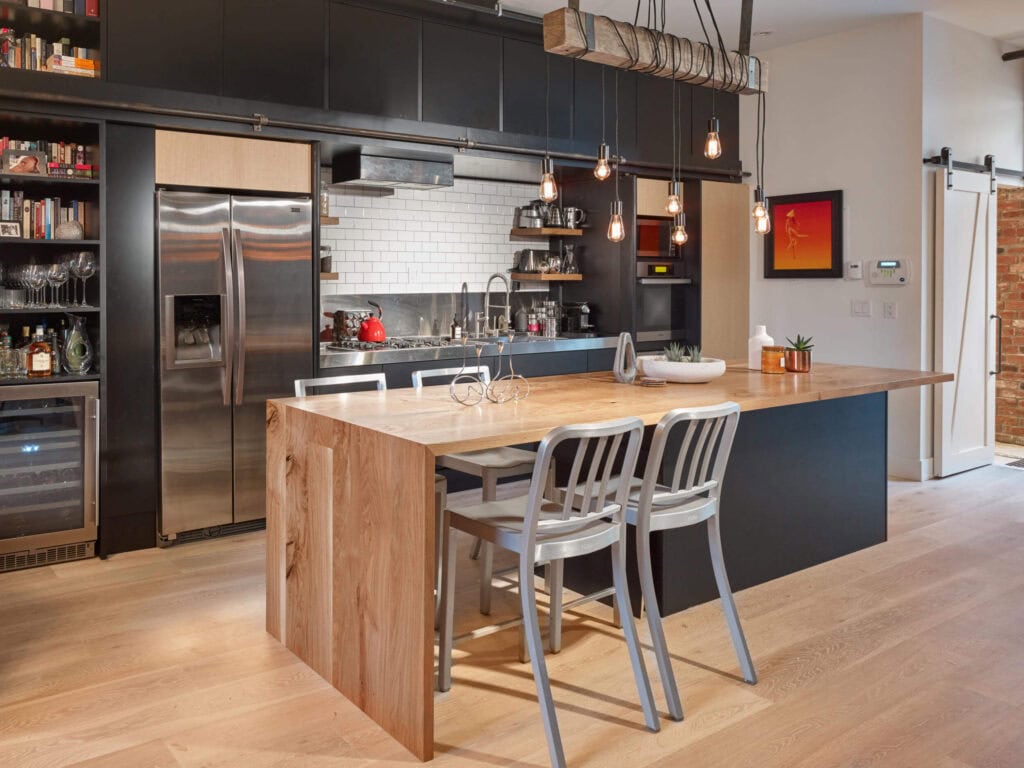
Ceiling heights are another factor. Many older Vancouver condos have 8-foot ceilings, and once you account for bulkheads concealing ductwork and sprinkler lines, the usable height drops further. Upper cabinet heights, range hood placement, and lighting design all need to account for the actual ceiling clearance in your unit, not the standard dimensions in a kitchen showroom.
Plumbing and Electrical Constraints in Condo Kitchens
In a house, your plumber can reroute drain lines and water supply almost anywhere by running pipes through the floor and basement below. In a condo, your plumbing connects to a vertical stack shared by every unit above and below you. Moving your sink or dishwasher more than a few feet from the existing stack means running drain lines at a slope across the floor, which can require raising a section of flooring to maintain proper drainage. Doable, but it adds cost and reduces ceiling height in that area.
Relocating gas lines for a range is even more restricted. Some strata buildings prohibit gas line modifications entirely. Others require engineering review and strata council approval. If you’re planning to switch from electric to gas cooking, or move a gas range to an island, confirm with your strata that it’s permitted before you invest in design.
Electrical capacity is a common surprise in older buildings. A unit built in the 1980s may have a 60-amp or 100-amp panel that was sized for the appliances of that era. A modern kitchen with an induction cooktop, wall oven, built-in microwave, and dishwasher can push electrical loads well beyond what the original panel supports. Upgrading the panel may require coordination with the building’s electrical room and strata approval. The BC Building Code sets minimum requirements for electrical capacity, and your renovation must meet current code, not the code that applied when the building was constructed. Your contractor should flag this early, not after the old kitchen has been demolished.
If you’re unsure what’s structurally possible in your unit or whether your building’s systems can support the kitchen you want, our pre-construction advisory is designed to answer exactly these questions. We assess your unit, review strata bylaws, and identify structural, plumbing, and electrical constraints before you commit to a design direction.
Strata Rules and Building Logistics for Kitchen Renovations
Every strata building in Metro Vancouver has bylaws governing renovations, and condo kitchen renovations are no exception. At minimum, you’ll need to submit your plans to strata council for review. Depending on your building, this could mean providing contractor insurance certificates, detailed scope of work documents, engineering reports for structural or plumbing changes, and a construction schedule within the building’s permitted construction hours. For a detailed walkthrough of the approval process, see our strata approval guide.
Most buildings restrict construction noise to weekday daytime hours, typically 8:00 or 9:00 AM to 5:00 PM, with no work on weekends or holidays. Some add further restrictions, limiting noisy work like demolition to specific windows within those hours. This directly affects your timeline. Work that might take three weeks in a house can take five or six weeks in a condo because of the compressed daily schedule.
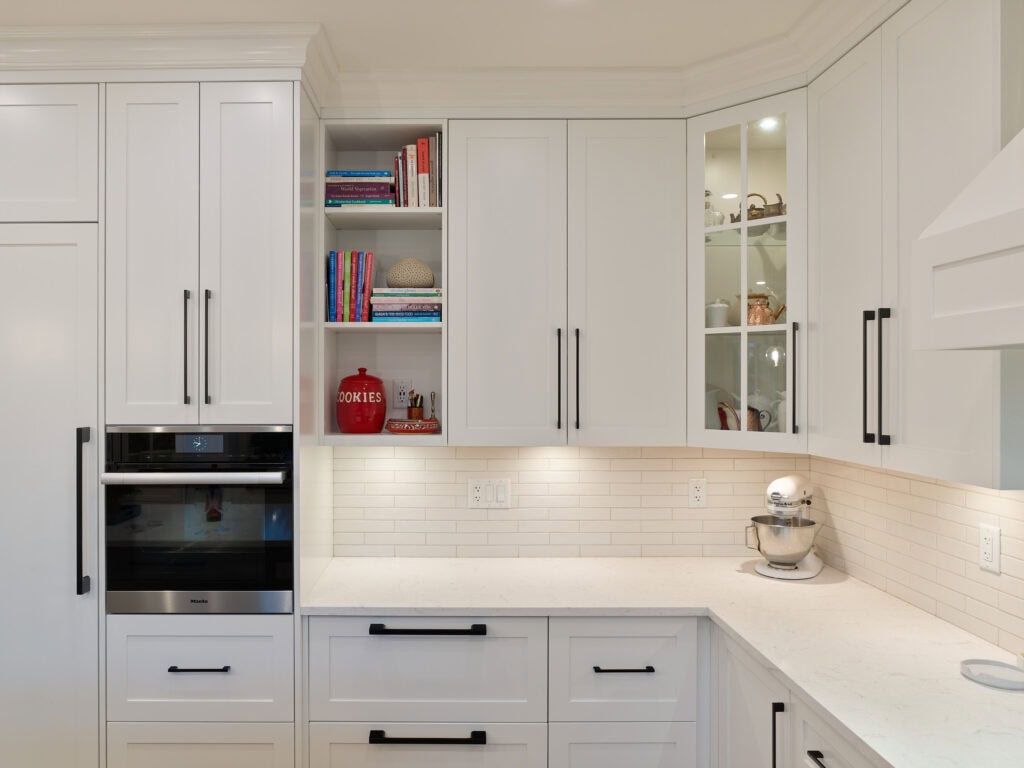
Material delivery and debris removal compound the timeline. Everything enters and leaves through the service elevator, which you share with other residents and possibly other active projects in the building. Large items like cabinetry sections and countertop slabs need to fit in the elevator or stairwell, which occasionally forces material selection compromises. We’ve had projects where a one-piece countertop had to be fabricated in two sections because the elevator dimensions couldn’t accommodate the full slab.
These logistics aren’t dealbreakers, but they are real costs. A contractor experienced in condo work builds these constraints into the schedule and budget from the start. A contractor who primarily works on houses may underestimate both. For a detailed breakdown of how these factors affect pricing, see our guide to condo renovation costs in Vancouver.
Design Considerations for Condo Kitchens
Condo kitchens in Vancouver tend to be compact, typically 80 to 150 square feet. Making the most of that space requires design decisions that are different from a house kitchen where you have more room to work with.
Vertical storage matters more in a condo kitchen. Floor-to-ceiling cabinetry, pull-out pantry systems, and corner carousel units can significantly increase usable storage without expanding the footprint. If your ceilings allow it (and your bulkheads don’t get in the way), extending upper cabinets to the ceiling eliminates the dust-collecting gap above standard cabinets and adds meaningful storage.
Lighting deserves more attention than most condo kitchen plans give it. With lower ceilings and often limited natural light, a layered lighting approach, with under-cabinet task lighting, recessed ceiling lights, and possibly pendant fixtures over a peninsula or island, makes a significant difference in how the kitchen feels and functions. LED under-cabinet lighting is inexpensive to add during a renovation and dramatically improves the usability of counter space.
Appliance selection matters for both function and logistics. Integrated (panel-ready) appliances create a seamless look in a small kitchen, and counter-depth refrigerators prevent the fridge from protruding into the walking path, a common problem in galley-style condo kitchens. If you’re considering an induction cooktop, confirm your electrical panel can handle the load before committing to the purchase.
What a Condo Kitchen Renovation in Vancouver Actually Costs
A condo kitchen renovation in Vancouver typically costs between $40,000 and $80,000 for a mid-range to high-end result in 2026. That range covers new cabinetry, countertops, appliances, plumbing fixtures, lighting, flooring, and the labour to install everything within the constraints of a strata building.
The lower end of that range reflects a kitchen where the layout stays largely the same and finishes are mid-range: solid wood or quality thermofoil cabinets, quartz countertops, and standard appliances. The upper end involves layout modifications, custom cabinetry, integrated appliances, under-cabinet and accent lighting, and potentially opening a partition wall to the living area. Per square foot, expect $140 to $250 depending on the scope and finish level.
If your unit is in an older concrete building and the renovation reveals outdated wiring, insufficient electrical panel capacity, or plumbing that needs rerouting, expect the budget to shift toward the higher end. Build a 10% to 15% contingency into your budget. In older buildings, surprises behind walls are the norm, not the exception. A pre-construction assessment from a design-build firm will give you a far more accurate budget range than any online calculator.
How long does a condo kitchen renovation take in Vancouver?
Plan for 6 to 10 weeks of construction after strata approval and permits are in place. Add 1 to 2 months for the pre-construction phase (design, strata approval, permitting, and material ordering). Restricted construction hours in most Vancouver condo buildings mean work moves slower than in a house. Lead times for custom cabinetry and countertops can add additional weeks if not ordered early.
Can I move my kitchen island or add one in a condo?
It depends on your building’s structure and plumbing. If the island doesn’t require plumbing (no sink or dishwasher), it’s straightforward as long as there’s enough clearance, typically 42 inches minimum around all sides. If you want a sink in the island, the drain line needs to reach the existing plumbing stack at a proper slope, which may require a raised floor section. Some stratas also have specific bylaws about island installations. Check before you design.
Should I choose gas or induction for my condo cooktop?
This depends partly on your building. Some stratas prohibit gas line modifications, which rules out gas if you don’t already have it. Induction is increasingly popular in Vancouver condos because it’s efficient, produces less ambient heat (important in smaller kitchens), and doesn’t require gas infrastructure. However, induction cooktops draw significant electrical current, so confirm your panel has capacity. If you need a panel upgrade, factor $2,000 to $4,000 into your budget.
Do I need a permit for a condo kitchen renovation?
If you’re keeping plumbing and electrical in their existing locations and not removing walls, you typically don’t need a building permit. If you’re moving plumbing, upgrading electrical, or making structural changes, you do. Strata approval is separate from municipal permits and you may need both. Your contractor should advise on what’s required for your specific scope of work.
Can I keep my existing kitchen layout and still get a significant upgrade?
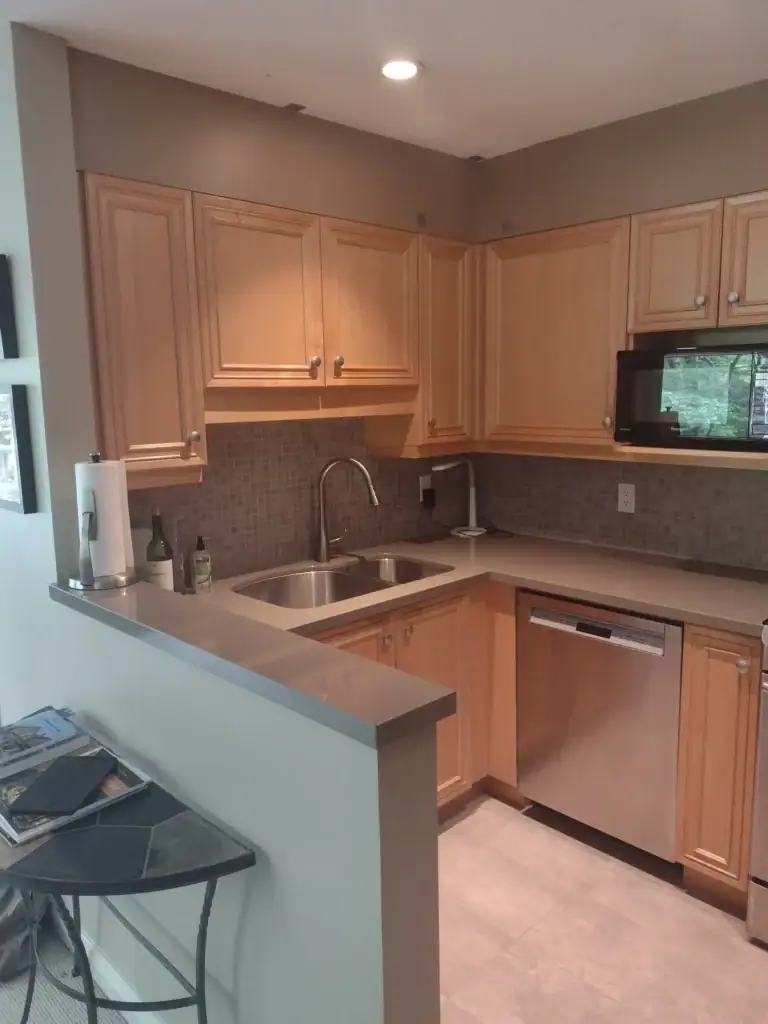
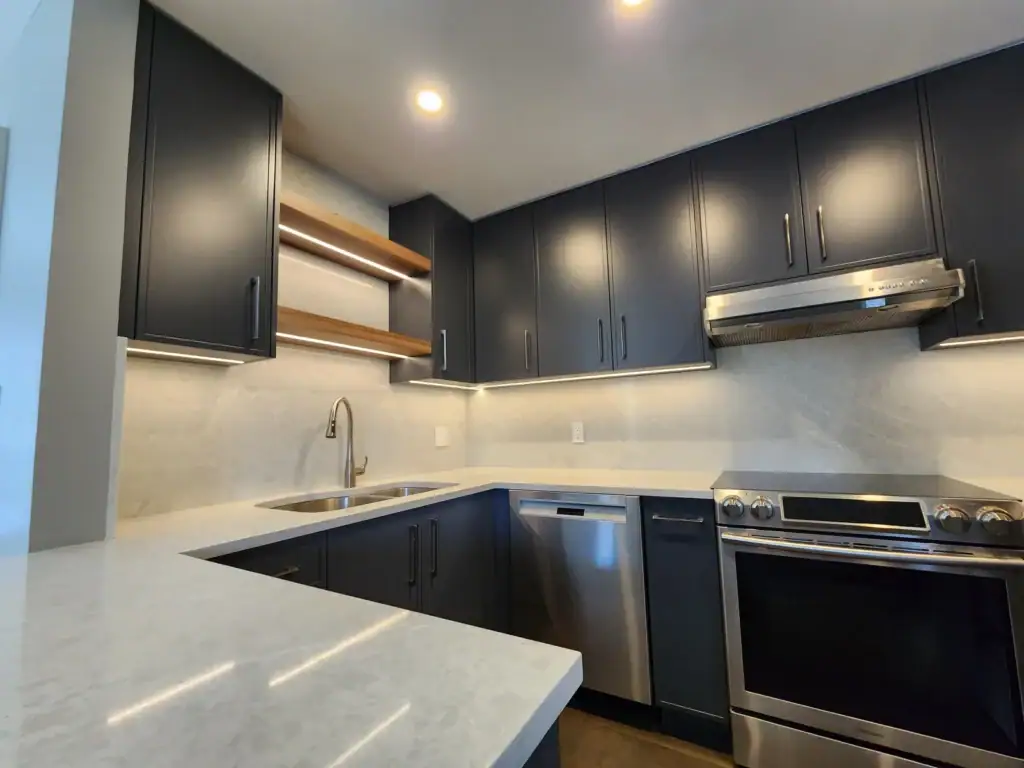
Absolutely. Replacing cabinetry, countertops, appliances, lighting, and flooring within the existing layout is the most cost-effective approach and avoids the complications of plumbing relocation, structural assessment, and raised flooring. Many of the condo kitchen renovations we complete in Metro Vancouver keep the original layout and still produce a dramatic transformation through material selection, lighting design, and smart storage solutions.
Start with the Right Assessment
If you’re considering a condo kitchen renovation in Vancouver, the most productive first step is a conversation with a contractor who understands condo work. Not every firm has experience navigating the strata approval process, coordinating with building management, and designing within the structural constraints of a multi-unit building.
reVISION Design + Build has been renovating condos and homes across Metro Vancouver since 2004. We handle the full design-build process: assessing your unit, developing a design that works within your building’s realities, managing strata approvals, and running construction from start to finish. If you’re ready to find out what’s realistic for your kitchen, reach out for a consultation.