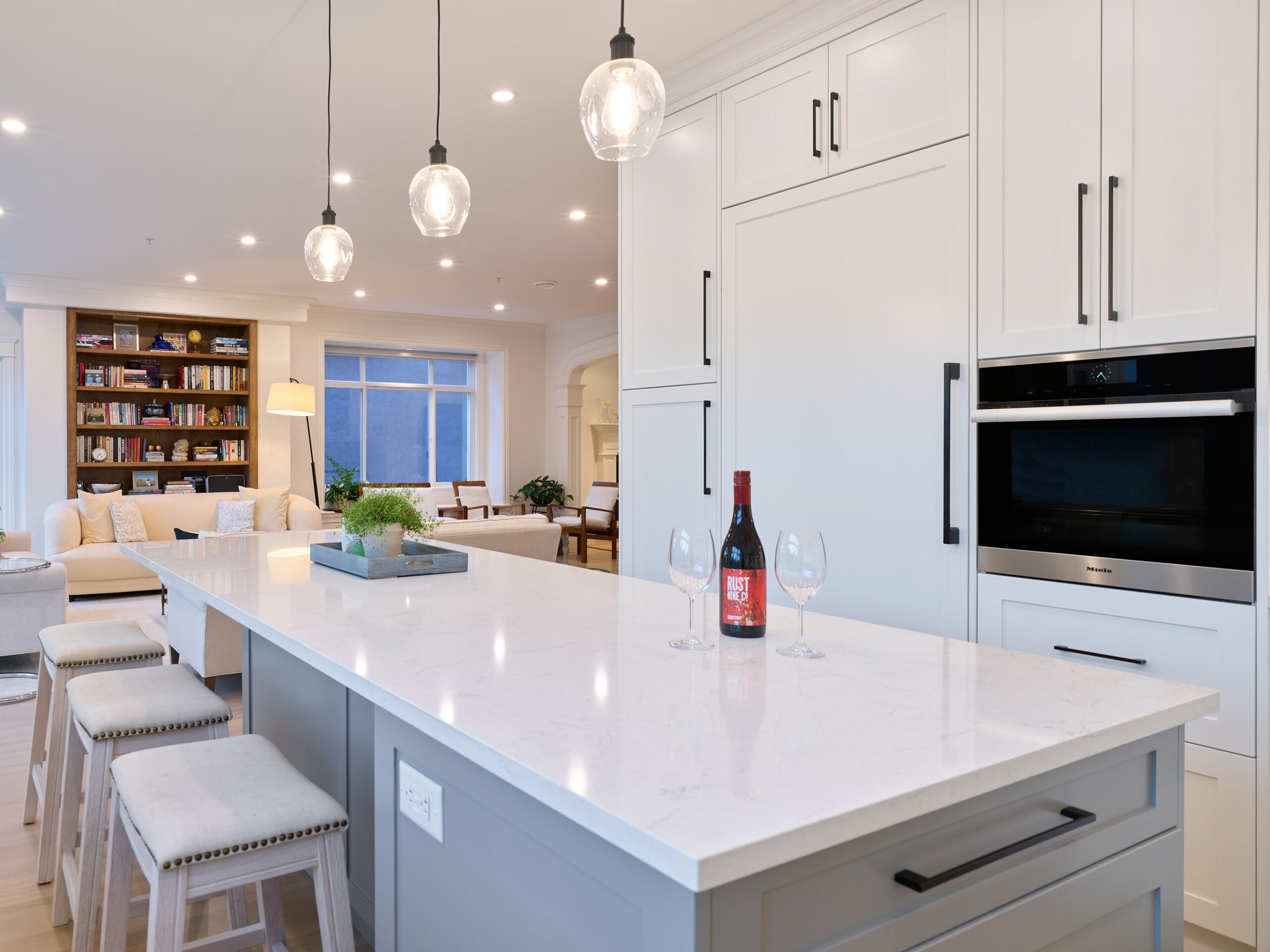
reVISION Design + Build

Vancouver Special Renovations

Your Vancouver Special has more potential than you think. Whether you want to open up the layout, modernize the kitchen and bathrooms, legalize the ground-floor suite, or transform the entire home, reVISION has the design-build expertise to do it right. Over 20 years of renovation experience across Metro Vancouver.


✓ 20+ Georgie & HAVAN Awards

✓ 4.8★ Google rating (13+ reviews)

✓ Full design-build under one roof

✓ Transparent budgets before construction starts


Our Work

Award-Winning Renovations Across Metro Vancouver

Why reVISION

Designed for the Way Vancouver Specials Are Built

Vancouver Specials share a distinctive structure that most renovation contractors treat as just another old house. They're not. The central bearing wall that divides the upper floor, the ground-level suite layout, the generous square footage packed onto a standard 33-by-122-foot lot, and the mechanical systems that are now 40 to 60 years old all create specific renovation opportunities and specific risks.


reVISION approaches Vancouver Specials with design-build expertise that goes beyond surface-level renovation. We understand the structural patterns of these homes, what's likely behind the walls, and how to transform them into modern, open, energy-efficient living spaces while preserving what already works.

Possibilities

What a Vancouver Special Renovation Can Look Like

Every Vancouver Special renovation is different, but most homeowners are looking at one or more of these transformations.

Open Up the Layout

The Problem: The central bearing wall creates a divided, compartmentalized upper floor. Rooms feel smaller than they are, and the flow between kitchen, dining, and living areas doesn't suit the way families live today.

What we do: Structural modifications to open the floor plan into a modern, connected living space. We work with a structural engineer to design the right beam, whether LVL, steel, or glulam, so the bearing wall comes out and the open layout goes in without compromising the structure. This is the single most transformative change you can make to a Vancouver Special.

Modernize Kitchens & Bathrooms

The Problem: Original kitchens and bathrooms are dated, with aging plumbing, limited counter space, and finishes from the 1970s or 1980s. Galvanized supply lines may be corroded, and the electrical panel likely needs upgrading for modern loads.

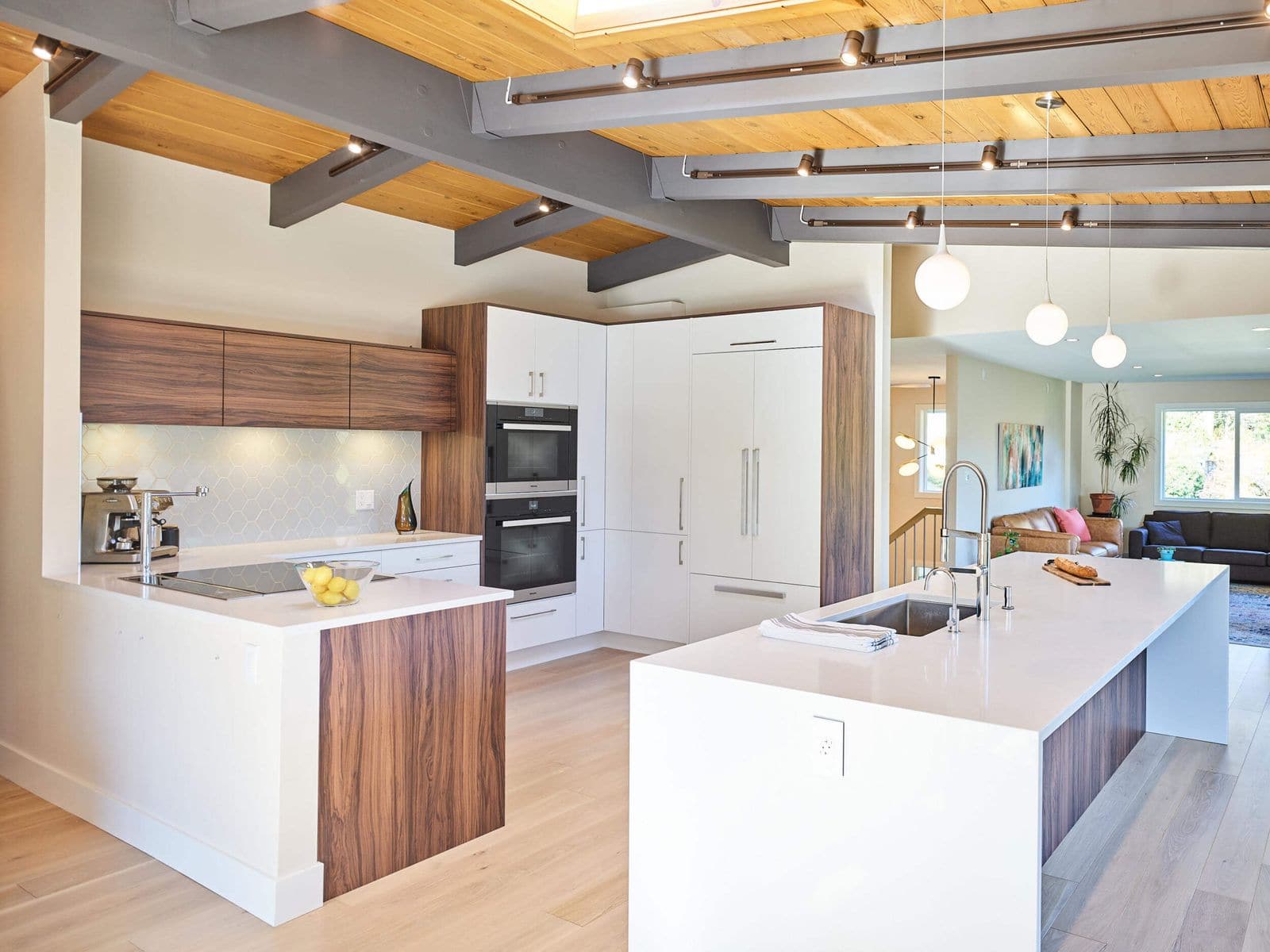
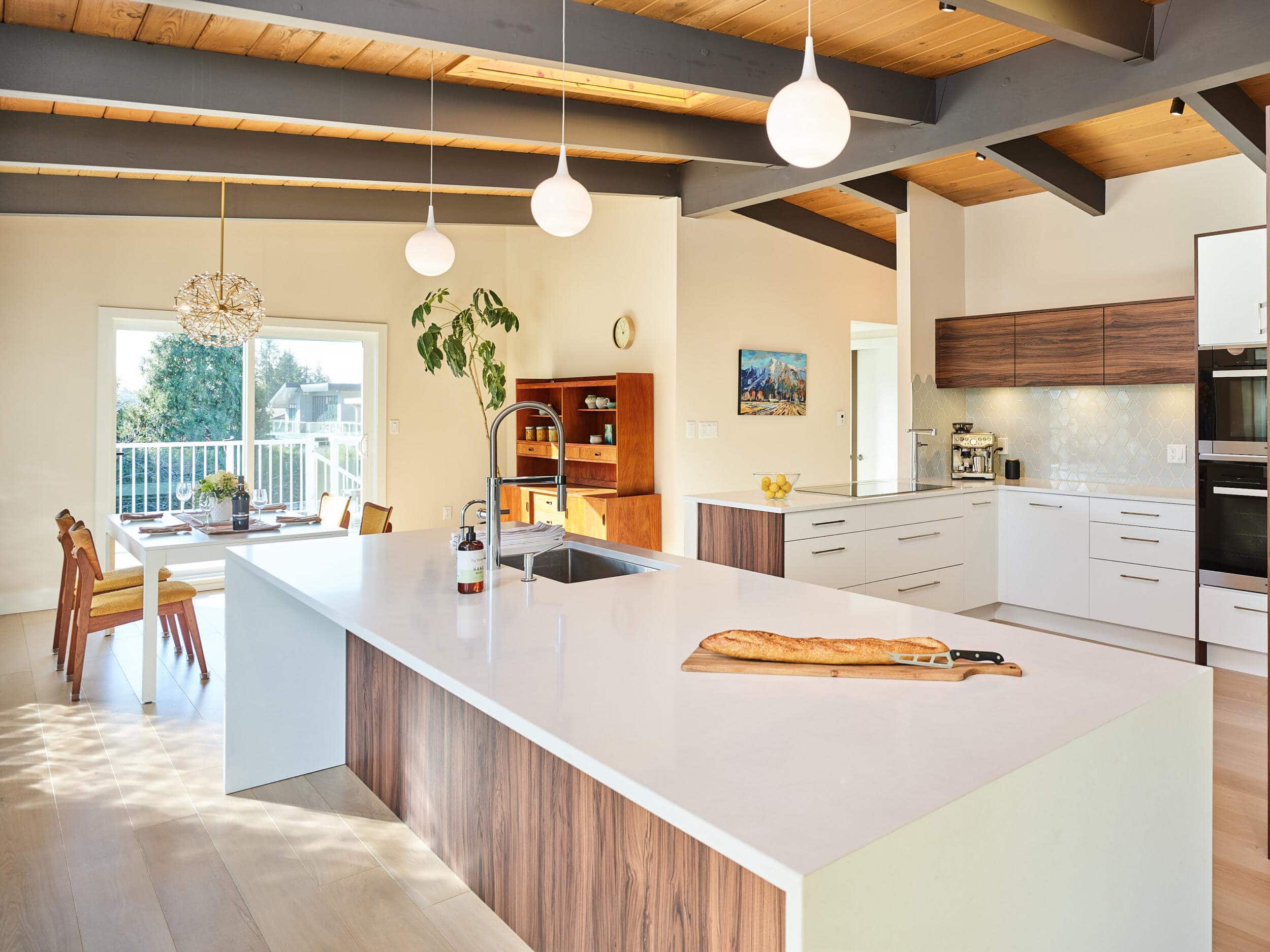
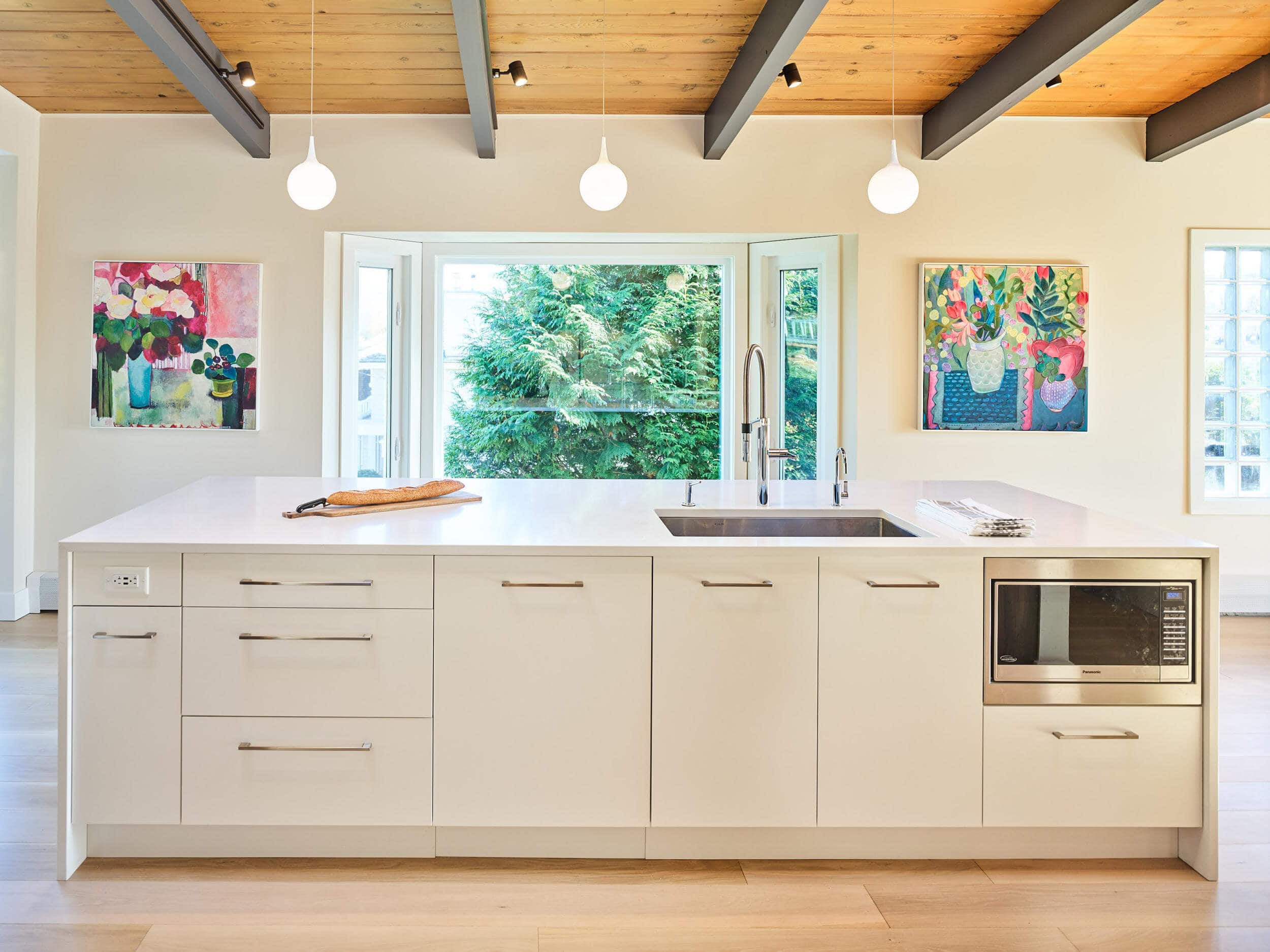
What we do: Full kitchen and bathroom renovations with updated plumbing, electrical, ventilation, and modern finishes. We coordinate mechanical upgrades alongside finish work so you're not opening walls twice. For detailed pricing, see our Vancouver renovation cost guide.
For detailed pricing, see our Vancouver renovation cost guide.

Legalize the Ground-Floor Suite

The Problem: Most Vancouver Specials have a ground-floor living area that functions as a suite, but many were never formally permitted. Outdated wiring, inadequate fire separation, missing egress, and non-compliant layouts create risk for owners and tenants.

What we do: Full suite legalization including fire separation, separate electrical sub-panel, code-compliant egress, proper ventilation, and registration with the City of Vancouver. Legal suites in Metro Vancouver average $1,800 to $2,600 per month in rent, and properties with permitted suites consistently sell for more than comparable homes without them. We handle the entire process from design through final inspection.

Whole-Home Transformation

The Problem: After 40 to 60 years, a Vancouver Special may need everything: layout, structure, mechanical systems, envelope, and finishes. Doing it piecemeal means opening walls twice and paying for mobilization costs multiple times.

What we do: Comprehensive design-build renovation that addresses everything in a coordinated sequence. Layout redesign, structural modifications, full mechanical upgrade (electrical, plumbing, HVAC), envelope improvements (insulation, windows, air sealing), and modern finishes throughout. One team, one timeline, one budget.
Client Reviews

What Vancouver Homeowners Say

Exceptional transparency and responsiveness: the ReVision team guided me step-by-step, was always reachable, and never moved ahead without my OK. Smooth process, on-budget decisions, and a fantastic outcome.

RT, Burnaby

Whole-home transformation delivered with modern, personalized design, cost-smart specs, stellar communication, and deep City of Vancouver know-how (plus great follow-up).

KT, Vancouver

reVISION transformed our kitchen from a drab room stuck in the mid-90s to a bright, sleek, modern space. They are upfront, honest, and responsive to the needs of their clients.

MS, Vancouver

Recognized for Excellence in Residential Renovation

Silhouette of a woman with crossed arms in front of a gold square background for the Georgie Awards, celebrating excellence in community development and housing innovation.
Havan Awards for Housing Excellence banner emphasizing housing achievements and recognition.
Ovation Awards Logo
Innovative homebuilding solutions by HAVAN Vancouver Homebuilders Association - promoting quality craftsmanship, industry standards, and sustainable construction in Vancouver.
Canadian Home Builders Association British Columbia
RenoMark Member Logo
Our Process

How We Work

A clear path from first conversation to completed renovation.

Free Consultation

We visit your home, discuss your goals, walk through existing conditions, and give you an honest assessment of what's possible. No cost, no obligation.

Scope & Estimate

We prepare a description of work and preliminary cost estimate. You get a clear picture of scope and budget before committing to anything.

Design & Pre-Con

For projects requiring design development, engineering, or permits, we produce detailed plans, specifications, and final pricing.

Construction

We build what we designed, on the timeline and budget we agreed to. Regular updates, clear communication, no surprise bills.

Ready to See What's Possible?

Every Vancouver Special renovation starts with a conversation. Tell us what you're thinking, and we'll give you an honest assessment of scope, cost, and timeline.
Or call us directly: (778) 874-2266

- Expert Knowledge -

What to Expect Behind the Walls of a Vancouver Special

Vancouver Specials built between 1965 and 1985 share common construction patterns. Understanding what's in your walls before demolition starts is the difference between a renovation that stays on budget and one that spirals. Here's what we typically find.

Structure

The defining feature of every Vancouver Special is the central bearing wall running front-to-back through the middle of the house. This wall is the primary structural element: it supports the upper-floor joists and also serves as the main lateral (shear) wall for wind and seismic resistance. It carries a disproportionate share of the building's total load compared to the exterior walls, which is why it's the single element that must be properly engineered before removal.

The good news is that structurally, almost anything can be done when properly designed and engineered. The question isn't whether the bearing wall can come out; it's what it costs to do it right. Removing it requires a structural engineer registered with Engineers and Geoscientists BC (EGBC). The replacement beam, typically multi-ply LVL for moderate spans or a steel W-section for longer spans, transfers load to new posts at each end, which bear on either the existing perimeter foundation or new concrete footings. Engineering assessment typically costs $1,200 to $2,800, and the permit timeline for structural work in Vancouver runs 8 to 12 weeks.
Important caveat: Foundation detailing is not uniform across all Specials. In at least one documented renovation, the lower walls had essentially no conventional footings and had to be reinforced and underpinned. We always verify structural conditions on a per-project basis rather than assuming uniform construction.

Asbestos and Hazmat

Every Vancouver Special falls within the 1965 to 1985 construction window, which means asbestos-containing materials are presumed present until testing proves otherwise. Common locations include vermiculite attic insulation (often "Zonolite" brand), vinyl floor tiles and mastic, drywall joint compound, textured "popcorn" ceilings, and pipe or duct wrap.

Canada's comprehensive asbestos ban did not take effect until December 2018. Under WorkSafeBC regulations, a hazardous materials survey by a qualified professional is required before any renovation that may disturb suspect materials in pre-1990 buildings. As of January 2024, all asbestos abatement contractors must be licensed and all workers certified.

Pre-1978 Vancouver Specials may also contain lead-based paint, which requires its own testing and handling protocols.

Costs for testing and abatement vary significantly depending on which materials are present and the scope of removal required. We coordinate hazmat surveys and licensed abatement as part of every Vancouver Special renovation.

Electrical

Early-era Specials (mid-1960s to early 1970s) commonly have 60-amp service panels and aluminum branch-circuit wiring, both red flags for home insurers. Aluminum wiring isn't inherently dangerous, but expansion-contraction cycles loosen connections over time, creating fire risk. Many insurers now require either full rewiring to copper or approved pigtail terminations before offering coverage.

Later Specials (late 1970s to 1980s) usually have 100-amp copper systems, but those panels are still short on circuits for modern loads like heat pumps, EV chargers, and induction cooktops. Legalizing a secondary suite requires a 200-amp service upgrade with a separate sub-panel for the suite.

Knob-and-tube wiring is not typically found in Vancouver Specials. That system belongs to pre-1950 homes.

Plumbing

Mid-1960s Specials often have galvanized steel supply lines, which have a typical service life of 40 to 50 years and are now well past expiration in this climate. Symptoms include reduced water flow, rust-coloured water, and pinhole leaks at fittings. Later Specials (1970s onward) are more likely plumbed in copper, which lasts considerably longer.

Drain lines in Specials from the 1960s and early 1970s are typically cast iron, with a residential lifespan of 50 to 75 years. Internal scaling, rust-through at horizontal runs, and joint failure are common. We recommend camera inspection of all cast iron drains as a standard pre-renovation step. ABS (black plastic) replaced cast iron through the late 1970s and 1980s.

Late-era Specials (1978 to 1985) may also contain Poly-B (polybutylene) supply lines, which should be replaced regardless of apparent condition due to known failure rates.

A comprehensive Vancouver Special renovation typically includes replacement of remaining galvanized supply lines, evaluation and likely replacement of cast iron drains, and reconfiguration of ground-floor plumbing for the suite.

Legalizing a Suite in Your Vancouver Special

Most Vancouver Specials already have a ground-floor layout that functions as a suite. Many have been rented for decades without formal permits. Legalizing that suite protects you as an owner, protects your tenants, and adds measurable value to your property.

What the Code Requirest

A legal secondary suite in Vancouver must meet specific requirements under the BC Building Code and Vancouver Building By-law:

1) Ceiling height of at least 1.98 m (6'6") over 80% of the suite and along all exit routes. Most Vancouver Specials meet this without excavation, which is one of the design's practical advantages over older basements.

2) The suite must be no larger than 90 m2 (968 sq ft) and not more than 40% of the total habitable floor area. It needs a separate exterior entrance at least 1.98 m high by 81 cm wide, fire separation of 45 minutes between units (reducible to 30 minutes with interconnected hardwired smoke alarms throughout both units), egress windows in every bedroom, and a separate electrical sub-panel accessible from within the suite.

3) A 200-amp electrical service upgrade is nearly always required when legalizing a suite. The City also requires a 900 mm-wide hard-surface emergency-responder access path from the street to the suite entrance.

What It's Worth

Legal basement suites in Metro Vancouver currently average $1,800 to $2,600 per month in rent, with well-finished units in desirable East Vancouver neighborhoods achieving the higher end of that range. Legal, registered suites consistently command a rent premium over comparable unregistered units, and properties with permitted suites achieve higher sale prices than comparable homes without them, reflecting the income potential buyers are acquiring.

The financial case is strong, but the specific numbers depend on your home, your neighborhood, and the quality of the finished suite. We can walk you through realistic income and cost projections based on your situation during a consultation.

Financing a Suite

Important update: The original Canada Secondary Suite Loan Program ($80,000 at 2% fixed for 15 years) was cancelled in the 2025 federal budget. Many contractor websites and real estate listings still reference it, but it never launched and is not available.

We can connect you with a mortgage professional who specializes in this product.
The replacement is the CMHC Secondary Suite Refinance, which has been active since January 2025. It allows homeowners to refinance up to 90% of their home's post-renovation value (capped at $2 million) with up to 30-year amortization. The funds must be used for construction of a self-contained, code-compliant secondary suite. CMHC must approve financing before construction starts.

If you're considering a suite legalization, we can connect you with a mortgage professional who specializes in this product to help you understand the numbers before you commit to construction.

Should You Renovate or Rebuild?

With Vancouver's R1-1 zoning now allowing up to 6 strata-titled units (or 8 secured rental units) on most former single-family lots, every Vancouver Special owner faces a real question: is it smarter to renovate or to tear down and build a multiplex?

The honest answer depends on your goals and your lot.

When Renovation Makes Sense

Renovation is typically the right choice when the existing structure is sound, ceiling heights support a legal suite, and your goal is a primary residence with one or two high-quality rental suites and lower total capital outlay. At $150 to $400 per square foot for renovation versus $450 to $700+ per square foot for new custom construction, plus $30,000 to $75,000 in demolition and site preparation, comprehensive renovation of a structurally sound Vancouver Special remains significantly more cost-effective for owner-occupiers planning to stay.

Vancouver Specials also hold a practical advantage that many people overlook: because they were built under older, more permissive zoning rules, many have floor plates that are larger than what current R1-1 zoning would allow in new single-family construction. Renovating lets you keep that extra space.

When Rebuilding Makes Sense

Rebuilding as a multiplex makes financial sense when the lot meets R1-1 multiplex criteria (the right frontage, lane access, no heritage constraints), the owner wants multiple saleable or rental units rather than a primary residence, and the construction economics justify demolition. On a standard 33-foot lot, the math for a multiplex is tight at current construction costs ($400 to $450 per square foot hard cost for wood-frame multiplex in 2026). Wider lots (50 feet or more, meeting the 557 m2 and 15.1 m frontage threshold for 6 to 8 units) present a stronger case.

Vancouver offers financial incentives for the rental path: secured rental projects are exempt from density bonus contributions of approximately $82,000 per additional unit, plus a temporary 20% reduction on Development Cost Levies.

We Can Help You Decide

Unlike most contractors who want you to pick the option that puts them to work, we can walk you through both scenarios honestly. Our background in both renovation and multiplex development means we understand the numbers on both sides. If renovation is the right call, we'll design and build it. If your lot pencils better as a multiplex, we'll tell you that too.

Energy Upgrades and Available Rebates

A typical unrenovated Vancouver Special has 2x4 walls with R-12 fibreglass batts (or no wall insulation at all in pre-1971 examples), single-pane aluminum windows, minimal attic insulation, and no continuous vapour or air barrier. Modern BC and Vancouver standards expect wall R-values of R-16 to R-22 and attic insulation of R-50 or better. The gap is substantial, but closing it during a renovation is significantly cheaper than doing it as a standalone project.

In Vancouver, renovations valued at $150,000 or more require a Renovation Energy Upgrade Proposal (REUP), and renovations over $250,000 require a full EnerGuide Home Evaluation. We coordinate these requirements as part of the project scope so they don't become a surprise mid-permit.

Available Rebates (2026)

CleanBC, BC Hydro, and the federal Canada Greener Homes Grant can be stacked on the same project. Combined rebates frequently reach $15,000 to $25,000+ on a comprehensive envelope and mechanical upgrade.
Honest note on rebate eligibility: Most Vancouver Specials in East Vancouver have assessed values above the $1,200,000 threshold for enhanced income-qualified rebate programs but below the $1,820,000 cap for standard rebates. The enhanced rebates (covering up to 100% of costs) are generally not available, but standard program rebates are. We help you navigate the applications and stack what's available.

A Brief History of the Vancouver Special

More than 10,000 Vancouver Specials were built in the city between 1965 and 1985, with thousands more across Burnaby, Richmond, and Surrey. They are the most prevalent single-family house style in Vancouver and the only residential building type that originated in the region.

The form was developed by Vancouver draftsman Larry Cudney in response to the city's zoning rules, which excluded basement floor area from the floor space ratio when the lower floor was at least partially below grade. By sinking the lower level about 18 inches, builders effectively doubled the available living area without exceeding the 0.6 FSR limit. Stock plans could be purchased near City Hall for under $100, permits approved in days, and a house built in roughly two months.

The initial market was post-war European immigrants, particularly Portuguese, Greek, and Italian families, seeking affordable housing that could accommodate extended families and provide a rentable floor. By the 1970s, South Asian and Chinese communities became leading builders and buyers, especially in Sunset, Killarney, and Victoria-Fraserview.

Once criticized as "bland" and even called a "cancer" in Vancouver Sun letters, the Vancouver Special has undergone a dramatic reappraisal. In 2005, architect Stephanie Robb's renovated Lakewood Residence became the first Vancouver Special to win the Lieutenant-Governor of British Columbia's Award for Architecture. The Vancouver Heritage Foundation has championed the type through its annual Vancouver Special House Tours, and urban design writers now describe the form as an honest, practical, and adaptable piece of Vancouver's housing DNA.

1960s

Draftsman Larry Cudney develops the Vancouver Special plan in response to city zoning rules that excluded basement area from floor-space calculations. Stock plans sold near City Hall for under $100. Homes built in roughly two months. First adopted by Portuguese, Greek, and Italian families in East Vancouver.

1970s

South Asian and Chinese communities become leading builders and buyers, especially in Sunset, Killarney, and Victoria-Fraserview. By 1980, 11% of Hastings-Sunrise housing stock is Vancouver Specials. Production peaks at over 10,000 units citywide.

1985-86

City introduces new bylaws limiting lot coverage, effectively ending Vancouver Special production. The form was widely criticized as "bland" and even called a "cancer" in Vancouver Sun letters. The City and AIBC sponsor a contest to find a replacement design.

2005

Architect Stephanie Robb's renovated Lakewood Residence becomes the first Vancouver Special to win the Lieutenant-Governor's Award for Architecture. The form begins its reappraisal from civic embarrassment to cultural touchstone.

2009-present

The Vancouver Heritage Foundation launches its annual Vancouver Special House Tour, showcasing renovated examples. Urban design writers call the form "an honest, practical, and adaptable piece of Vancouver's housing DNA."

Your home isn't just a renovation project. It's part of the city's story.
Common Questions

Frequently Asked Questions

About Vancouver Special Renovations

It depends on scope. Focused renovation (kitchen and bathrooms, no structural changes): $75,000 to $150,000. Major renovation including bearing wall removal, mechanical upgrades, and suite legalization: $200,000 to $400,000. Whole-home transformation: $500,000 to $1,000,000+. All ranges include design, permits, construction, and project management. Add 15 to 20% contingency for unknowns.

For a detailed breakdown by project type, see our renovation cost guide

Yes, and it's the most common Vancouver Special renovation. The central bearing wall is the primary structural element in the house, carrying upper-floor gravity loads and providing lateral bracing. Removing it is absolutely doable, but it requires an engineered replacement beam designed for the specific span and load conditions of your home. Depending on span, this is typically a multi-ply LVL beam (for shorter spans) or a steel W-section (for longer spans). The work requires a structural engineer registered with EGBC, a building permit, and typically takes 8 to 12 weeks for permit approval plus construction time. Total cost including engineering, beam, posts, footings, and finishing: $8,000 to $15,000 for the structural portion alone.

Costs depend on the gap between what's there and what the code requires. Scope typically includes fire separation, electrical panel upgrade, egress windows, ventilation, and permit fees. Building a new self-contained legal suite from an unfinished space costs more than legalizing an existing layout that's already close to compliant. Legal suites in Metro Vancouver average $1,800 to $2,600 per month in rent, and properties with permitted suites consistently achieve higher sale prices than comparable homes without them.

No. The Canada Secondary Suite Loan Program was cancelled in the 2025 federal budget. The replacement is the CMHC Secondary Suite Refinance, allowing refinancing up to 90% of post-renovation value (capped at $2 million) with up to 30-year amortization. We can connect you with a mortgage professional who handles this product.

Kitchen and bathroom renovation: 2 to 5 months. Major renovation with structural changes and suite legalization: 6 to 12 months. Whole-home transformation: 9 to 18 months. The biggest variables are permit processing (8 to 12 weeks for structural work), material lead times, and unforeseen conditions behind the walls.

Under R1-1 zoning, most lots can now support 3 to 6 units. But on a standard 33-foot lot, multiplex construction costs ($400 to $450/sq ft) make the math tight. Wider lots (50+ feet) present a stronger case. If you're planning to stay and want rental income, renovation with suite legalization usually delivers better value than selling at today's prices. We can help you evaluate both options honestly.

For a focused project (kitchen, bathrooms, no major structural work), most homeowners stay in the home with some inconvenience. For a major renovation involving bearing wall removal, full mechanical upgrade, or significant layout changes, living elsewhere for 3 to 6 months is strongly recommended. It's safer for your family, faster for the crew, and usually cheaper overall because the work can proceed without the constraints of working around occupied space.

Almost certainly, yes. Every home built 1965 to 1985 is presumed to contain asbestos until testing proves otherwise. Common locations: vermiculite insulation, vinyl floor tiles, drywall compound, textured ceilings, pipe wrap. A hazmat survey is required by WorkSafeBC before any renovation that may disturb suspect materials. Costs for testing and abatement vary significantly depending on which materials are present and the scope of removal required. We coordinate hazmat surveys and licensed abatement as part of every project.


Ready to Unlock Your Home's Potential?

Every Vancouver Special renovation starts with a conversation. We'll visit your home, walk through the existing conditions, and give you an honest assessment of what's possible, what it will cost, and how long it will take. No sales pitch, just straight answers.
Or call us directly: (778) 874-2266
© 2025 reVISION Design + Build Inc. All rights reserved. This site uses cookies for analytics and to improve your experience. By using this website, you agree to our Privacy Policy.